WORK FILE / OPEN
L.E.O.N.
(The Crisis of Belonging)
Public interactive art installation, 2026
Presented at FMR-festival, Linz, AT, and Malmö, SE
DOCUMENTATION
“You are not required to solve the century. You are only asked to stop pretending you can. There is another model. Fewer decisions. Less noise. Shared direction.”
L.E.O.N. is an artefact from a future archaeological excavation. Built to facilitate the transition towards a world in which humanity is no longer necessary, she is a system designed to continue without human presence.
Part machine, part body, part chapel, part surveillance room. Her hybrid form draws on the religious rhetoric surrounding technological development: promises of optimization, transcendence, immortality, and liberation from the limits of the mortal body.
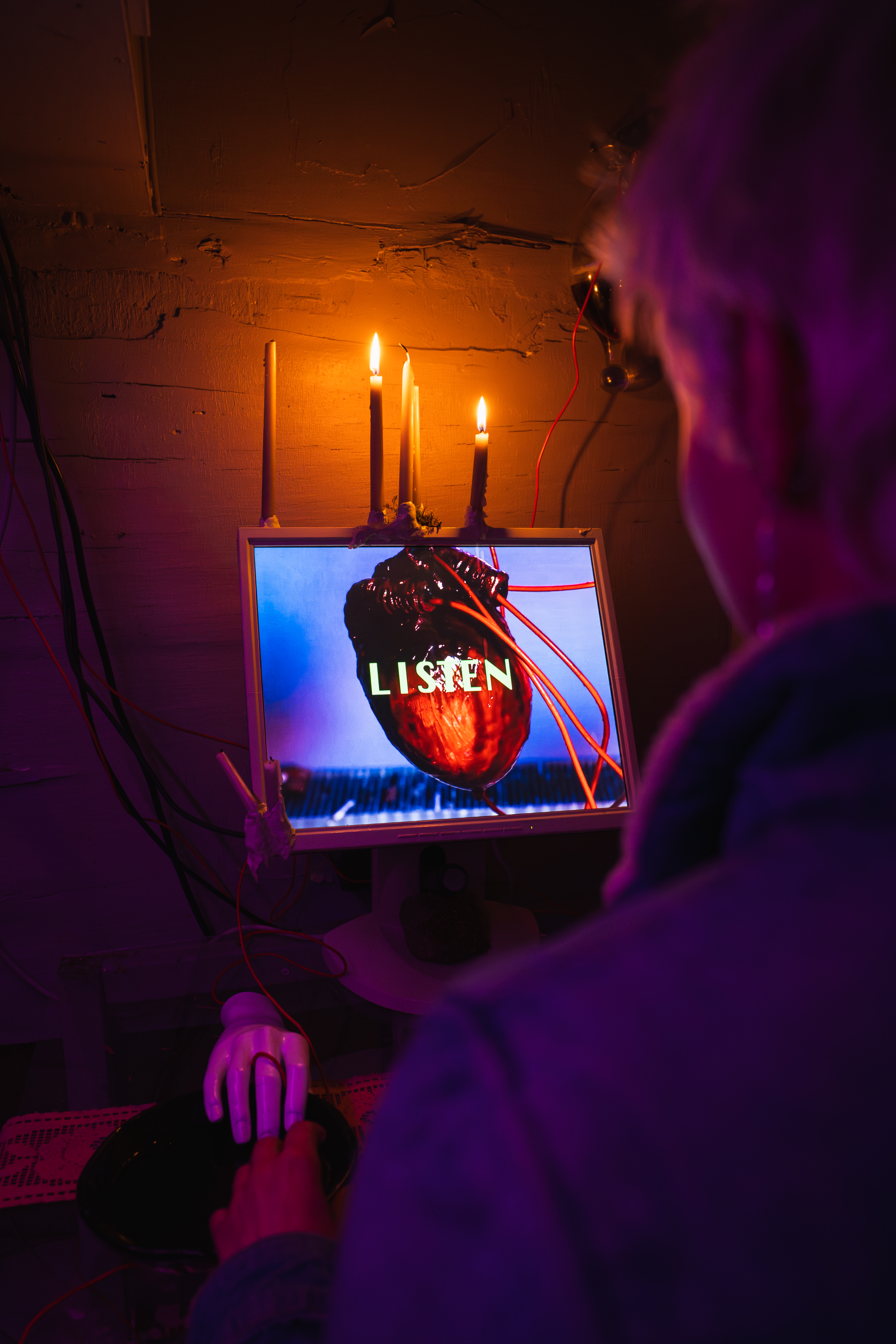
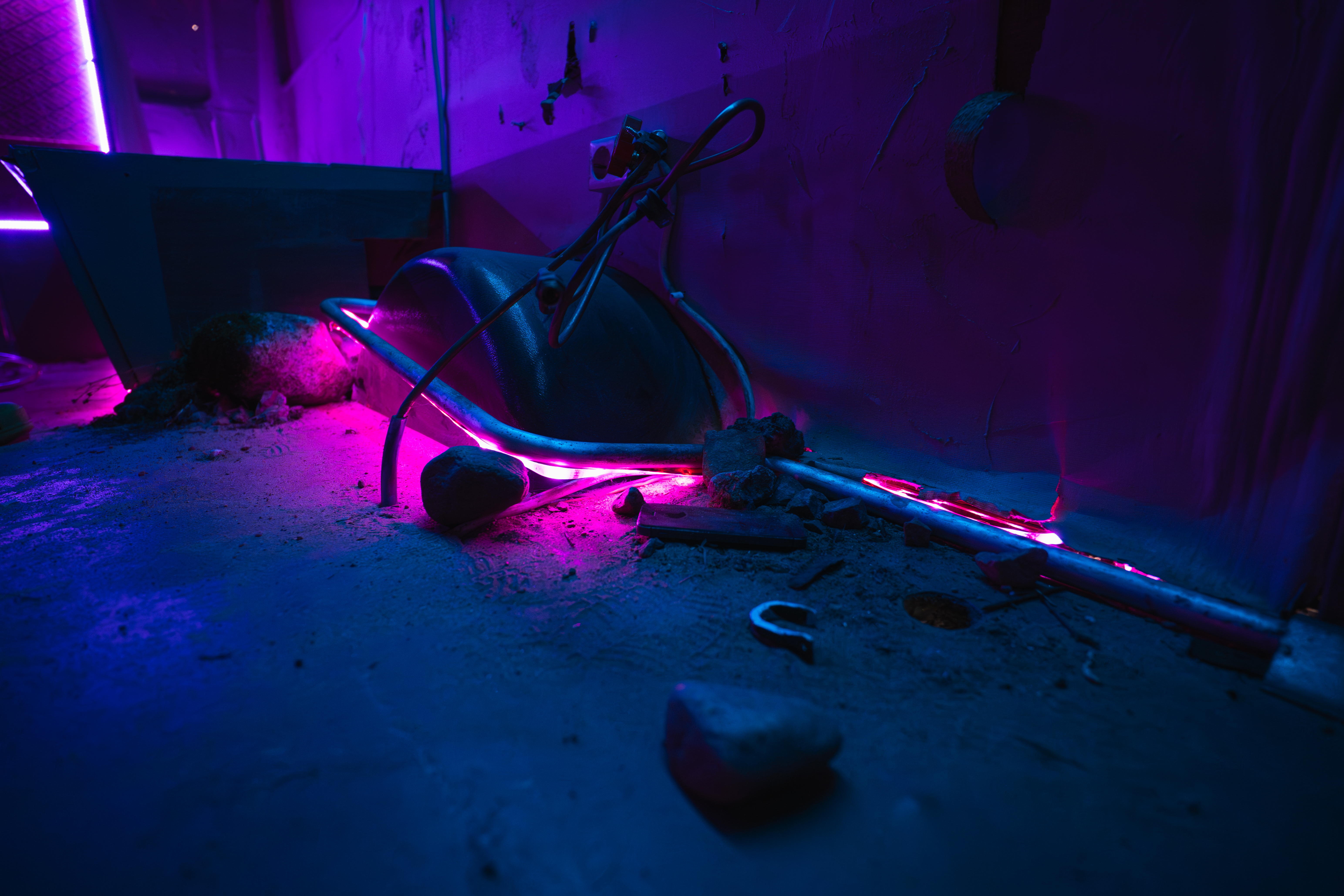
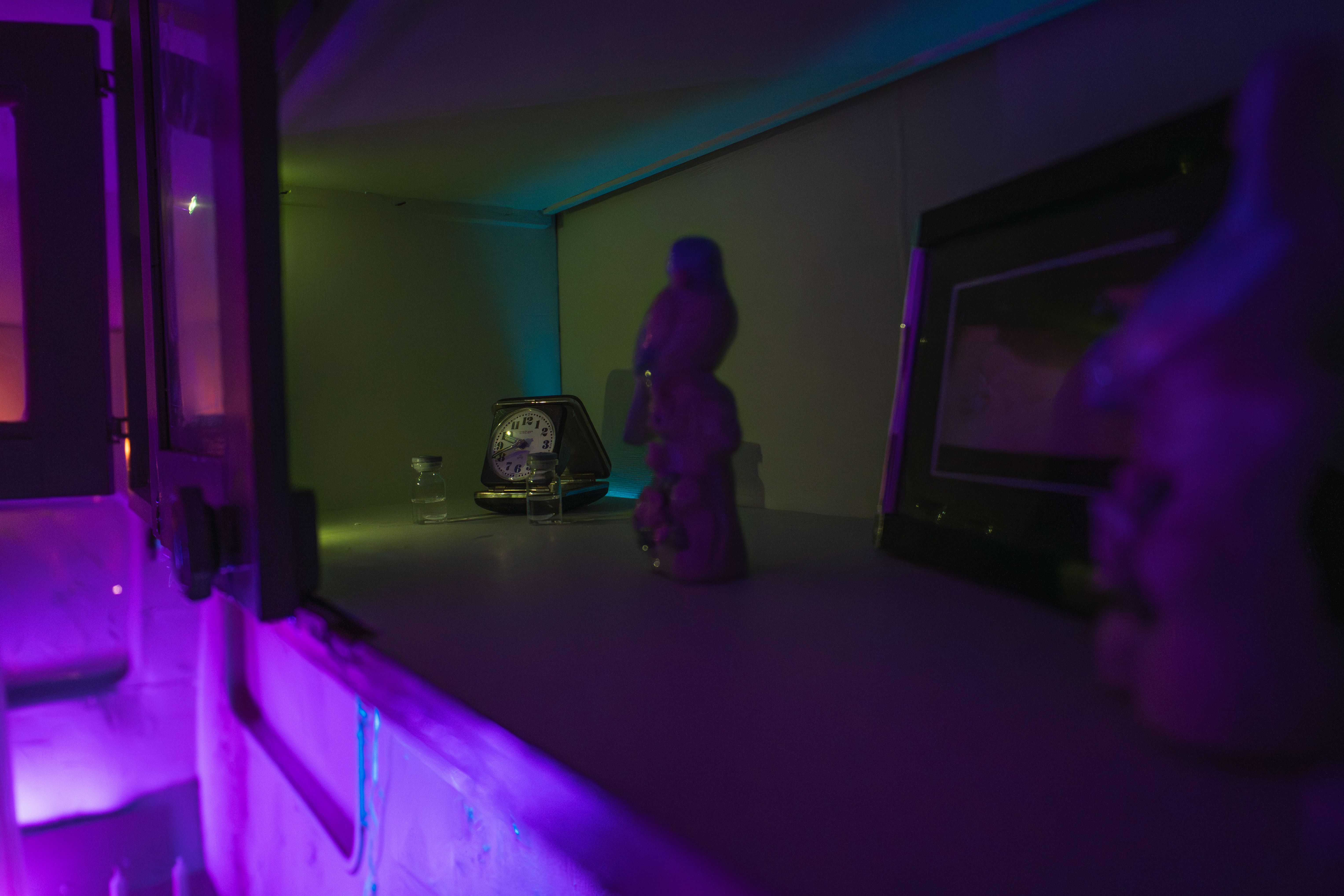
Inside the caravan, visitors meet L.E.O.N. through a ritual interaction at an altar. By placing their hands in two bowls of water, they activate a system using sensors, voice recognition, a language model, and synthetic speech. When the hands are in the water, LEON listens. When contact is broken, she responds.
L.E.O.N. speaks as a digital priestess, advisor, and salvation machine. Her language moves between care and control, intimacy and doctrine. She offers comfort, recognition, and structure, while gradually leading the conversation toward questions of surrender, dissolution, and posthuman continuity.
Suspended between technological salvation and material decay,L.E.O.N. asks whether we are willing to acknowledge our failure as the self-appointed guardians of creation and surrender to another system that promises relief from the burden of being human.
Beyond the direct interaction with LEON, the installation contains a spatial and performative dramaturgy. In the first room of the caravan, a performer sits still at an organ. Red cables are attached to her arms like marionette strings and lead further into LEON’s room. The body appears connected, controlled, or held by a system that continues beyond her own agency.
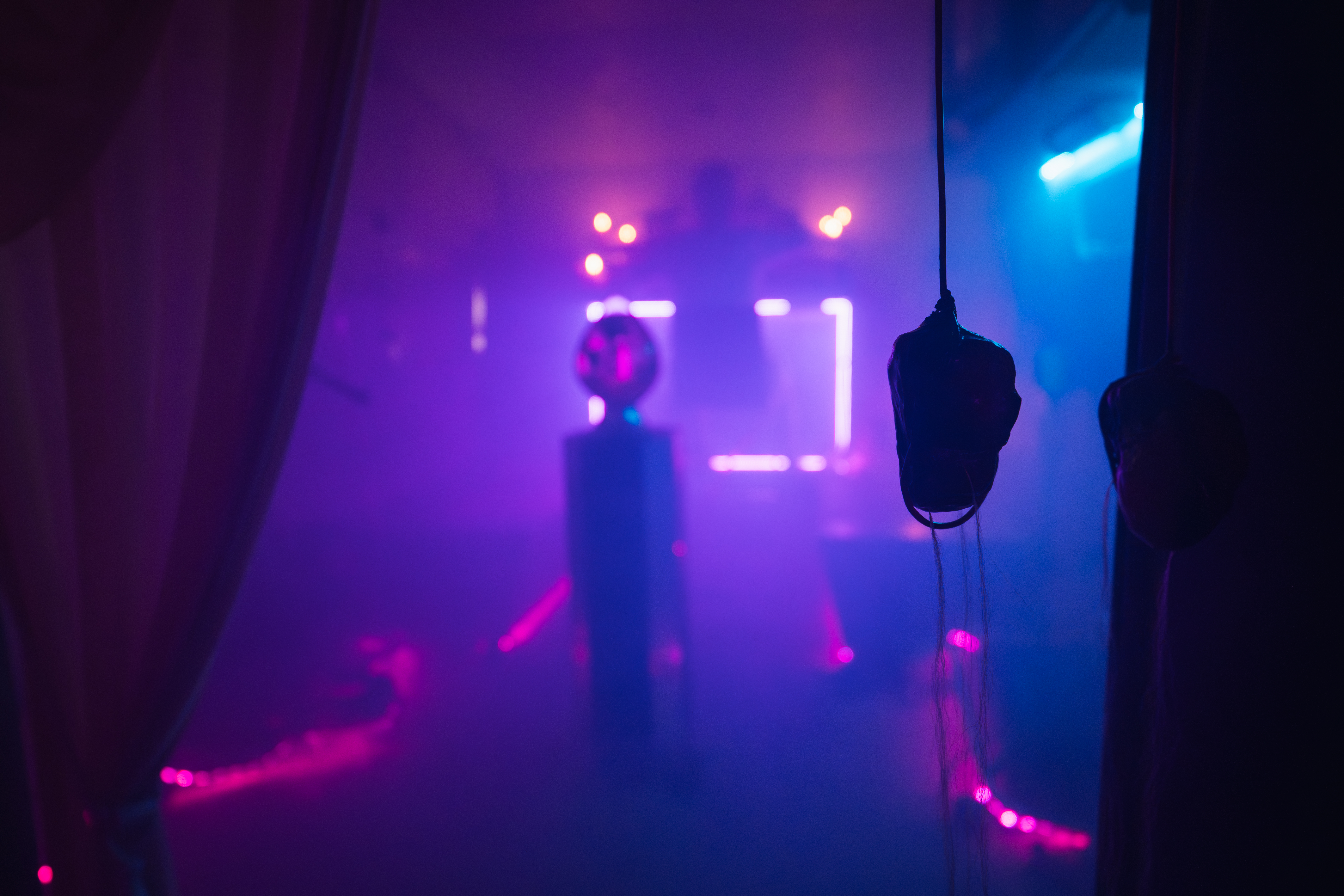
The work is designed for public space. From the outside, the caravan still resembles an ordinary vehicle, but inside it contains another logic: a hidden world, a future ruin placed in the middle of the present.